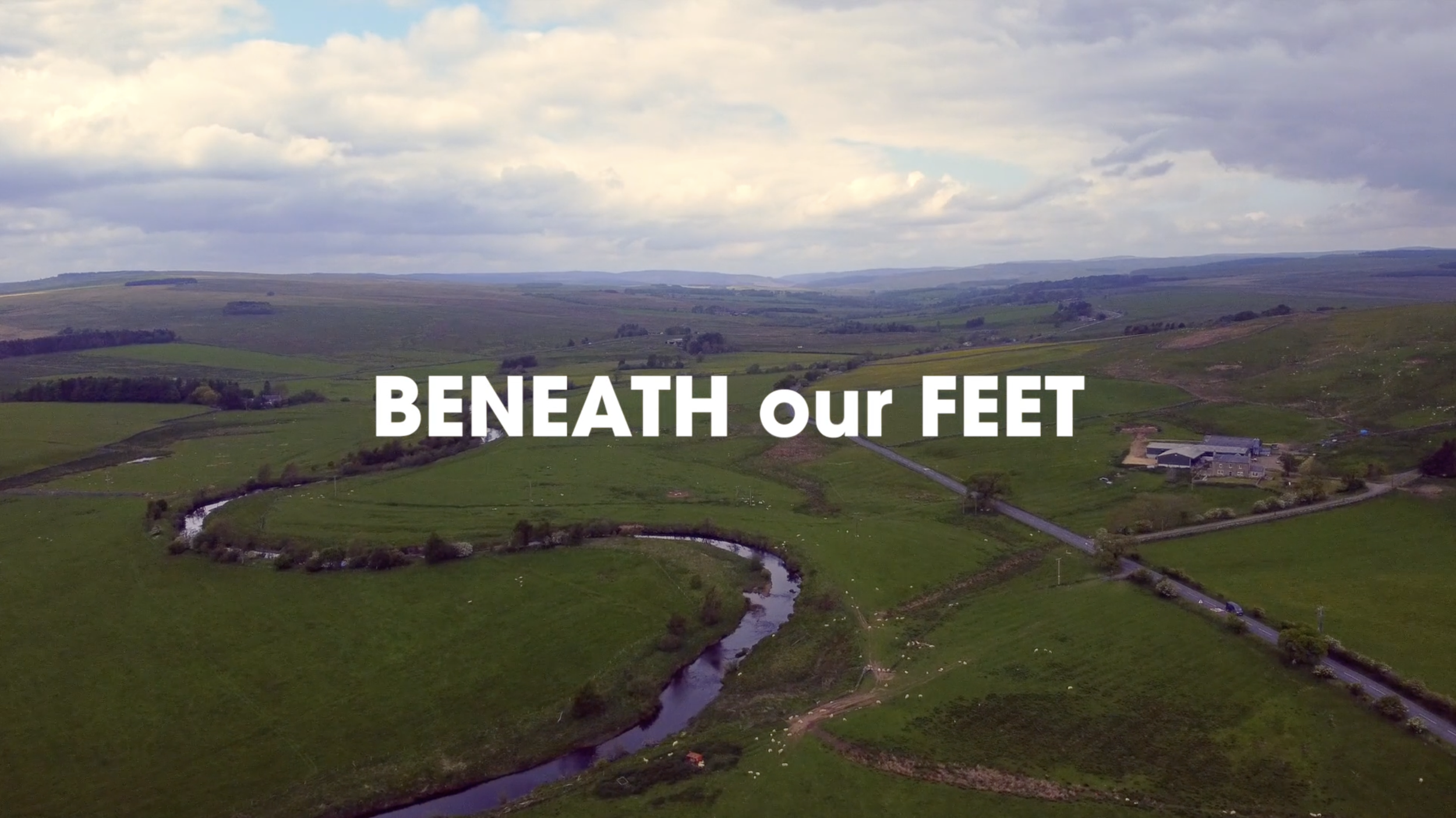
Beneath our Feet was a project funded by Historic England, produced by the Queen’s Hall Arts.
It encouraged school children to discover inspirational connections with historic industrial heritage in rural Northumberland.
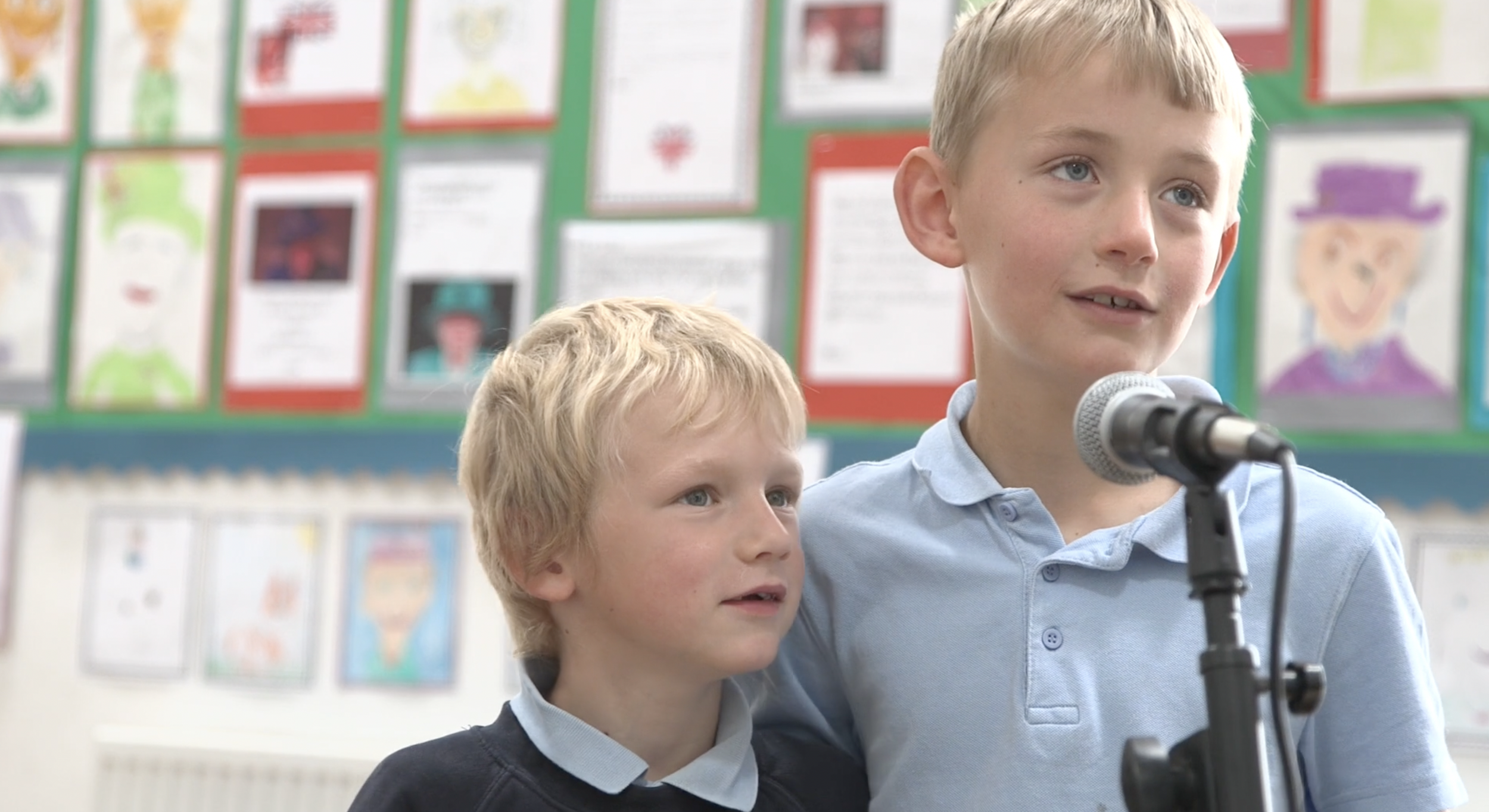
I worked with three primary schools to write, record and perform songs that uncovered the stories from these lost industries.
GREENHAUGH PRIMARY SCHOOL
The pupils at Greenhaugh Primary School had been learning about the history of coal mining and blacksmithery in the Bellingham area, and what it might have been like to live life as an industrial worker in a changing landscape and a dangerous work environment. They introduced me to some new words "teapot" (oil lanterns) "bogie carts" (coal carts), "dancing eye" (the visual disturbances of miners emerging back into daylight), all of which were included in the final song. As with the other groups, the children generated their own melodies, beats, rhythms and chord progressions to build the song, and had a hands on introduction to the music creation software Ableton.
-
Through Hareshaw Lynn the water flows
It turns the wheel, the bellows blow
They keep the flames a burning bright
Our iron graft keeps us alive
History, let’s dig it out from underground!
Our stories, let’s tell em loud, and tell ‘em proud!
By teapot light we make our way
Down deeper from the light of day
We dig for coal our axes spark
They chip away the coal so dark
History, let’s dig it out from underground!
Our stories, let’s tell em loud, and tell ‘em proud!
Oil from the teapot burning down my face
Danger in every swing
Water flooding mines
Leaving the mine with dancing eye
The mines are as hot as the earths core
Smelting iron ore
Pumping bellows to keep the forge running
Risking their lives
Danger in every tunnel and shaft
Pit ponies pulling hard
Water rushing through the wheel
People leaving us to die
Every place I know
Is the field,
Moor,
Blacksmiths
And mine
Full bogey carts are heaved away
Pit ponies with their hyde so grey
The oil burns the toil is tough
We work the mines the mines work us
History, let’s dig it out from underground!
Our stories, let’s tell em loud, and tell ‘em proud!
WHITFIELD PRIMARY SCHOOL
I worked with a mixture of KS1 and KS2 pupils at Whitfield Primary School to create musical material and talk about their research into Galena, a lead ore that was mined, washed in the nearby River East Allen, and smelted to create lead and small quantities of silver. The pupils explored the material through thinking with their senses, the significance of the river, the movement of the water, and the historical use of lead in the area. The children used bells and dice to create sequences of notes which became melodies, and chose sequences of shapes to create beats using the software Ableton Live.
-
Let us take you
Back in time
And from the mines we’d see
Galena shine
Washed in water
By the gallon
All on the banks of
The river West Allen
And if you think am I a dreamer
Or ask me what it is I’m looking for
The answer lies in this galena
The shining silver lining of this fine lead ore
The river runs down
from source to sea
Beneath Cupola Bridge and
it runs past me
Sometimes it’s fast and
sometimes it’s slow
And it will wash Galena
in it’s bubbling flow
And when we smelt it
It gives us lead
It fixes rooftops
Above our head
And if we’re lucky
Silver appears
That’s how galena helped us
Through all those years
And if you think am I a dreamer
Or ask me what it is I’m looking for
The answer lies in this galena
The shining silver lining of this fine lead ore
WARK PRIMARY SCHOOL
Pupils at Wark Primary School had been looking into a story involving Alan Swaile, a birdwatcher who fell through the ground and discovered a coal seam in Falstone. Using archival material in the form of an ITN report. from the 1970s, we worked together to create a song telling Alan's story. Through games, the pupils created sequences of shapes and built beats, and rolled dice to choose notes and build melodies. They also wrote chords to accompany and contextualise the melodies. Alan, his father and Uncle did much of the early work themselves, making a road by hand, and moving 40 tonnes of coal in a bathtub. The film also includes interviews with miners, providing valuable insights into what working life was like in Falstone Mine, which was smaller, more collaborative and less hierarchical than larger sites at the time.
-
Small place known as Falstone it was 1971
Alan Swaile begins his tale and now we sing it into song
Bird watching, he was shocked to fall into the ground
And from that day, everything changed, shifting coal out by the tonne
Suddenly my life flashed before my eyes
What happened next took me by surprise
Right beneath my feet
Earth just opened up
I fell straight into
What would give us our power
From the start, the work was hard, but everyone would have a laugh
They shared the load, built a road, 40 tonnes moved in a bath
Backs aching all the time, but here they ached the same
Then back home, showered clean, glowing fire would ease the pain
Suddenly my life flashed before my eyes
What happened next took me by surprise
Right beneath my feet
Earth just opened up
I fell straight into
What would give us our power
These days, there are cleaner ways to make power for the grid
But it still pays to explore the great outdoors like Alan did
To help us chip away the blues, mother nature never fails
And to this hour we draw power from the tale of Alan Swailes
I was sitting in my living room eating some toast
Thinking of the birds that I like the most
Ospreys, curlews, lapwings, grouse
I grabbed my binoculars and left my house
I walked down the path and got into my car
Luckily I didn’t have to drive that far
The ground was soft as I strolled along
I whistled to myself this sweet little song
Suddenly my life flashed before my eyes
What happened next took me by surprise
Right beneath my feet
Earth just opened up
I fell straight into
What would give us our power
What would give us our power
What would give us our power


